Calcaneal Spur Treatment in Sydney: Heel Pain, Causes & Chiropractic Care
25 March 2025
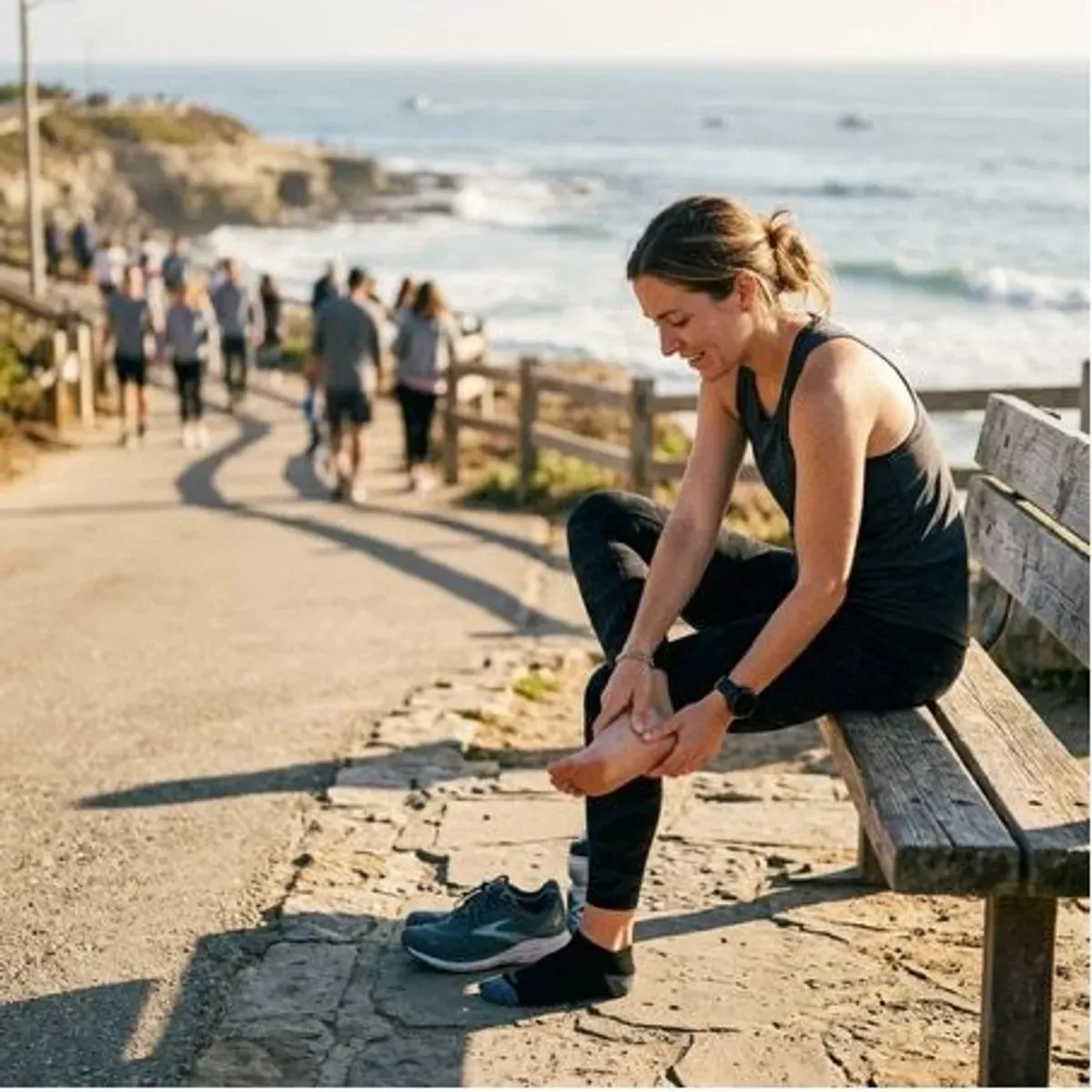
Having a calcaneal spur is painful enough; you just want to resolve it so the stabbing pains stop every time you walk. Whether it starts during a morning walk along Dee Why Beach or after long hours on your feet at work, only by identifying what’s causing excessive load on the heel can you begin the correct treatment. Below, we explain how calcaneal spur treatment is approached from a chiropractic and biomechanical perspective.
For most people, calcaneal spurs do not require surgery and can usually be managed conservatively. From a chiropractic perspective, successful management focuses on reducing tissue irritation while improving lower-limb biomechanics involving the foot, ankle, knee, hip, and pelvis.
What a Calcaneal Spur Actually Is (And Why It Hurts)
A calcaneal spur is a bone spur that protrudes from the bottom of the heel bone (calcaneus) over time. This extra growth of calcium is caused by prolonged stress and traction on structures such as the plantar fascia and supporting tissues of the heel and ankle.
Heel spurs seen on X-rays are not always the direct cause of pain. Research shows many people with heel spurs have no symptoms at all, while others experience pain related to plantar fascia irritation, heel fat pad irritation, or repetitive strain patterns affecting the tissues around the heel.
Common Symptoms of a Calcaneal Spur
Symptoms can vary from person to person, but common signs of calcaneal spur irritation may include:
- Sharp pain under the heel when first walking in the morning
- Heel pain after long periods of rest or inactivity
- Tenderness under the heel when standing
- Pain when walking barefoot on hard surfaces
- Increased discomfort after prolonged standing or walking
- Tightness through the arch of the foot or calf muscles
How to Tell If Your Heel Pain Is a Spur (And Why Assessment Matters)
A calcaneal spur, or "bone spur," is an abnormal growth of bone on the heel of the foot. It is often painless unless it causes friction against surrounding soft tissues. Heel pain due to a calcaneal spur typically hurts most when first beginning to walk in the morning or after a long period of rest or inactivity. However, with continued activity, the pain may temporarily settle before returning later in the day. The pain is usually at its worst when standing or walking on hard surfaces for long distances and may be alleviated with rest and application of ice.
Other conditions can also cause similar heel pain symptoms, including plantar fasciitis without a spur, Achilles tendinopathy, heel pad irritation, stress reactions, or nerve entrapment such as Baxter’s neuritis. A chiropractor can assess gait, joint movement, tissue sensitivity, and foot biomechanics to help identify contributing factors.
Step-by-Step Calcaneal Spur Treatment Plan (From a Chiropractor’s Perspective in Dee Why)
Calcaneal spur treatment is usually approached in stages, beginning with pain reduction, followed by restoring mobility and gradually rebuilding strength and loading tolerance through the foot and lower leg. OrthoInfo (AAOS) reports that more than 90% of patients improve within 10 months using staged conservative protocols . Patients progress most quickly on the calcaneal spur program when completing home management exercises, receiving soft tissue treatment in the clinic and progressing step-wise through each stage of treatment.
Step 1: Reduce Acute Irritation and Load (Weeks 1–2)
Initially the focus is on reducing sensitivity to pain and preventing further irritation. After any activity, applying ice for 15 minutes, 3–4 times a day, can help. Also important is modifying activities of daily living to reduce exposure to activities that place high strains on the heel such as walking, running, hills, and prolonged standing but it is equally as important not to cease all activity completely. The goal is to gradually return the body to normal movement and loading tolerance without excessively aggravating symptoms.
Over the counter anti-inflammatory medication is often used to treat plantar heel pain and can provide relief from symptoms for some people. While research has found that Australian GPs use medication in 45.1 encounters per 100 for the treatment of plantar heel pain , this does not indicate that medication is a primary management strategy for this condition. Rather, some patients may also use anti-inflammatory medication under guidance from their GP or pharmacist to provide immediate pain relief, to allow time for correction of underlying causes of mechanical overload and time for restoration of normal foot and ankle function to achieve long term results.
Step 2: Restore Tissue Capacity With Stretching and Strengthening (Weeks 2–6)
In most cases, after a period of time the symptoms of heel spur pain subside as the plantar fascia and the lower calf/Achilles complex adapt to handle normal loads placed upon the body. Your skilled chiropractor can introduce you to a simple home exercise routine and progressively modify it as your body becomes more tolerant and the tissues strengthen.
A practical routine often includes:
● Plantar fascia stretch: Place the foot across the lower leg of the opposite knee and gently pull the toes back toward the shin until a stretch is felt along the arch of the foot. Hold for 30 seconds and repeat for three sets.
● Calf Wall Stretch: Stand with your affected foot behind you and lean against a wall. Slowly lean forward until you feel a stretch in your calf, and hold for 30 seconds. Repeat three times and keep your heel on the ground for maximum benefit.
● Towel Scrunches: Place a towel on the floor and with your foot push the towel towards you using your toes. Perform two sets of 15 repetitions.
● Eccentric Calf Raises: Stand on a step, then lift up from your heels onto your toes. Slowly lower back down over a period of 3-4 seconds. Two sets of 12.
Dose intensity is important, but even intensity can be too much if not paired with consistent and accurate dosing over time. Some exercises may cause an increase in next-morning pain and need to be modified.
Step 3: Footwear, Orthotics, and Gait Mechanics (Weeks 2–6)
Supportive footwear plays an important role in reducing stress on the plantar fascia and heel during recovery. An important feature when choosing shoes is how they will reduce the stress at the point where the plantar fascia connects to the back of the heel. Additionally, a strong heel counter, support in the foot unit in the midfoot and substantial cushioning in the heel will also help to alleviate tension on the plantar fascia.
Your chiropractor can also assess your gait to determine the proper course of action. They can check to see if you overpronate or if you tend to lift your heel up too quickly when walking. They can also check your ankle’s range of motion to see if that puts abnormal stress on the plantar fascia. They can even check your hip to see if poor control of it contributes to your symptoms. You may need either an over-the-counter insert or a custom orthotic with a heel cup to redistribute some of your body weight away from the painful area and also to release some of the repetitive pull of the plantar fascia on your body as you walk.
Step 4: Chiropractic Hands-On Care to Improve Mobility and Reduce Strain (Weeks 3–12)
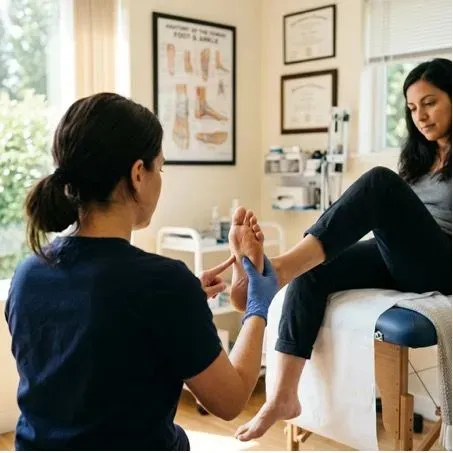
Chiropractic treatment can be very beneficial for patients with heel pain that hasn’t gotten better with simple home care measures. By identifying and releasing restrictions in loads that place stress on the plantar fascia, a doctor of chiropractic can help to decrease heel pain. A complete diagnosis of how the plantar fascia is affected by the lower limb kinetic chain requires a thorough evaluation of the foot position, ankle dorsiflexion, subtalar joint movement, tension through the calf muscles and Achilles tendon, knee position, hip position, pelvic alignment and even spine alignment.
Treatment in our Dee Why chiropractic practice involves a combination of chiropractic manipulations, soft tissue therapies, active and passive exercises and dry needling.
- Soft tissue release on the muscles of lower leg, soleus and plantar fascia to release excess tension and release contractions to increase tissue mobility.
- Joint mobilisation/manipulation of the foot and ankle and possibly the knee and/or hip.
- Training with load management to avoid symptom flares.
- Exercise Progressions to include building foot intrinsic, increasing calf strength and challenging the hip to be the strongest link, not a “weak link” at the heel.
For those who suffer from a variety of symptoms such as chronic pain , our whole body approach can be very helpful. Compensation patterns can show up in both acute injury/condition as well as in more chronic dysfunction patterns. Our Advanced Biostructural Correction (ABC) approach at Complete Chiropractic in Dee Why allows us to detect the whole body structural compensations that can cause people to walk abnormally and affect their health.
Take Your Next Step Toward Pain-Free Movement
Treatment of a plantar calcaneal spur starts with an accurate diagnosis and a step-wise approach to treat both the symptoms and the cause of the spur. Many patients improve once the main sources of mechanical overload and tissue irritation are identified and addressed. In many cases, ongoing heel pain is driven by repeated stress on a few highly sensitive structures rather than the entire heel itself.
Don't let heel pain hold you back from the things you love on the Northern Beaches. Our Complete Chiropractic Dee Why team aims to help patients return to comfortable walking, running, and day-to-day activity through a structured heel pain assessment and management approach. Unlike many other practices who assess heel pain based on the heel alone, our team will also assess the rest of the foot and ankle, and even how your body is moving, and how your gait is affecting the heel. Book online today for your heel pain assessment .
This article is intended for educational purposes only and should not replace medical advice, diagnosis, or treatment from a qualified healthcare professional.
Frequently Asked Questions
When should I see a professional urgently for heel pain?
You should see a doctor sooner rather than later if you experience severe pain, numbness, pins and needles or tingling sensations in your heel. You should seek an evaluation as soon as possible if you are unable to walk, the pain occurs as a result of a fall or injury, the pain is very severe, the skin and leg appear swollen, red, or warm, or you have numbness or tingling.
Additionally, people with diabetes, those who are immune compromised, and those with poor circulation should seek an evaluation as soon as possible.
Is an X-ray or ultrasound needed to diagnose a calcaneal spur?
No, an X-ray or ultrasound is not needed to diagnose a calcaneal spur. Imaging is not always required in the management of plantar fasciitis. It may be helpful in cases of substantial, persistent or atypical heel pain, and to rule out other causes of heel pain such as stress fracture. Your chiropractor will refer for imaging studies if your symptoms or physical exam findings do not correspond, or if you are not improving as expected.
Can I still exercise with heel pain?
For most heel injuries, it is best to avoid weight bearing activities. However, if you must train, swimming and using an elliptical trainer are good options. Reduce high impact (running, jumping) & incorporate lower impact exercises (swimming, cycling, aqua jogging). Walking distances should be kept short, avoiding hills; increasing mileage / frequency should be done based on the next day symptoms & frequency of flare-ups.
Are night splints helpful for heel spur related pain?
Night splints can be beneficial for patients by maintaining ankle and plantar fascia length at night and removing a primary pain stimulus that first appears in the morning. Patients who exhibit a marked increase in pain in the morning may benefit from night splints as an adjunct to stretches to loosen the calf and ankle, exercises to strengthen the foot, and instruction on correction of abnormal biomechanical gait
What should I look for in running shoes if I have heel pain?
For runners with plantar fasciitis, the key feature of a road running shoe might be a solid heel counter and supportive midsole. The main release feature would then be a rocker style toe-off that helps to reduce some of the mechanical stress out of the foot during gait. While some runners may find a slightly higher heel-to-toe drop beneficial, this is highly individual and will depend on factors such as foot position, ankle mobility and training volume. Our local chiropractors can assist with a gait and footwear review to look at how your feet move and how your current footwear affects this.
Does being overweight affect recovery from heel spur pain?
Yes, increased body weight can place additional load on the heel and may slow recovery. However, it is not insurmountable and even a small amount of weight loss in conjunction with some modification of loading and strengthening can make a big difference.
What can I do to prevent heel pain from returning?
Continuing to do your calf and foot exercises is important. As you start to reintroduce activities that involve an impact on your feet and ankles, mix and match some of the stiffer shoes with the more supportive ones to keep them from becoming too packed down or too unsupportive. Check in with yourself from time to time to make sure you are not returning to the levels of training, standing, mobility exercises or strengthening work that caused this problem initially. Remember, often the initial problem with a foot or ankle is related to a change in workload, footwear, or training or walking volume.
Related Posts
More articles about Carpal Tunnel, Foot & Ankle, Workplace Injuries, Exercise & Fitness and Wellness & Lifestyle

Tech Neck: Pain From Smartphone & Social Media Use
Are you reading this on a desktop computer, smartphone, or tablet? The position of your head and nec...
Read More
Chest Pain When Breathing: Causes and Chiropractic Solutions
Chest pain when breathing can present as sharp, dull, or achy sensations within the chest or rib cag...
Read More
Chiropractor Dee Why
When you call Dee Why home, your body feels the unique demands of coastal living. At Complete Chirop...
Read More
Understanding Lateral Epicondylitis: Causes, Symptoms & Treatment
Lateral epicondylitis, commonly known as tennis elbow, is a painful condition characterised by infla...
Read More
Chiropractor Manly
Looking to escape the grip of persistent pain that's keeping you from enjoying Manly's iconic lifest...
Read More
Chiro Brookvale
If you’re searching for Chiro Brookvale, you’ve come to the right place. At Complete Chiropractic, w...
Read MoreRelated Treatments
To learn more about our services, visit our homepage.
Frequently Asked Questions
Our approach
- Pinched Nerve Treatment
- TMJ Facial Release Treatment
- Carpal Tunnel Syndrome
- Neck Pain Treatment
- Poor Posture Treatment
- Chronic Pain Treatment
- Sciatica Pain Treatment
- Vertigo Treatment
- Back Pain Treatment
- Gym Injuries Treatment
- Spondylosis Treatment
- Sports Injuries Treatment
- Endonasal Cranial Correction
- Pregnancy Back Pain Treatment
- Tradie Injury Treatment
- Migraine Treatment
- Knee Pain Treatment
- Arthritis Treatment
- Headache Treatment
- Joint Pain Treatment
- Hip Pain Treatment
Related articles
- Ankylosis Spondylitis Relief Possible in our Dee Why Practice
- Paediatric Chiropractic Advice about Kids’ Spinal Health
- Chiropractor Queens Park
- Understanding Myelopathy | Chiropractic Education
- Tech Neck: Pain From Smartphone & Social Media Use
- Chest Pain When Breathing: Causes and Chiropractic Solutions
- Calcific Tendinitis of Shoulder: Understanding This Common Condition
- Chiropractor Balgowlah
- Chiropractor Dee Why
- Derailed in December? 3 Steps to keep your health on track
- Illiotibial band syndrome
- School Lunches – 5 Things To Avoid And 5 Must Haves
- Chiropractor Alexandria
- Chiropractor Beaconsfield
- Chiropractor Allambie Heights
- Chiro During Pregnancy: Supporting Maternal Wellness
- Staying At Your Peak Over The Holiday Period
- Chiropractor Darlinghurst
- Chiro Cremorne
- Chiropractor Centennial Park
- Chiropractor Pyrmont
- Chiropractor Palm Beach
- Chiropractor Freshwater
- Back Pain Relief while Pregnant
- Chiro Newport
- Chiropractor North Manly
- Chiropractor Mona Vale
- Headache Treatment & Relief | Complete Chiropractic
- Get Moving: Physical Activity Tips | Complete Chiropractic
- Chiropractor Sydney – Expert Pain Relief & Posture Correction
- Immune System – Beating Winter Colds and Flu
- What Is Spondylolisthesis? Here's All You Need to Know
- Will Chiropractors Help? Understanding Chiropractic Care 101
- Understanding Lateral Epicondylitis: Causes, Symptoms & Treatment
- Chiropractor Bondi Junction
- 5 QUICK KEYS TO RELATIONSHIP HAPPINESS
- Mindfulness
- Should I Combine Chiro and Other Treatments? A Guide to Integrated Care
- Dr Hooman Zahedi now a published author!
- Chiropractor Manly
- Carpal Tunnel Syndrome: Symptoms, Causes, and Treatment
- Chiro Brookvale
- Chiropractor Elanora Heights
- Chiropractor Rosebery
- HOW TO LISTEN TO YOUR BODY
- Chiro or Physio: Understanding the Differences and Choosing the Right Care
- Text Neck: Pain & Damage From Texting: Chiropractor Advice
- Endonasal Cranial Correction - How Does it Work and How Can it Help?
- Chiropractor Hunters Hill
- School Student Good Posture
- Drink More Water: A Natural Solution for Health and Wellness
- Migraines - A Quick Guide
- Take Care Of Your Gut!
- School Lunches Unpacked
- Find Relief for Post-Traumatic Headache
- Pain in the Buttocks: What to Do?
- Chiropractor in Queenscliff
- Chiropractor Fairlight
- Chiropractor Waverley
- Chiropractor Surry Hills
- Chiro Vs. Physio Vs. Osteo – Whats the difference?
- Shoulder Bursitis Treatment: All You Need to Know
- How To Use Chiropractic Care in the lead up to Labour
- Meet Guy Leech!
- You Are What You Eat – So What Are You?
- Sports Injuries/Performance
- Ankylosing Spondylitis: Understanding, Diagnosis and Treatment Options
- Correcting Bad Posture: 10 Factors That Impact It
- Chiropractors, Not only for Spinal Health
- Chiropractor Bellevue Hill
- Understanding and Managing Muscle Strain
- Chiropractor Paddington
- Chiropractor Mascot
- Get Your Body Ready for Summer
- Metatarsalgia Pain: Causes, Symptoms & Treatment Options
- Adhesive Capsulitis of Shoulder: Understanding Frozen Shoulder
- Chiropractor Kings Cross
- Chiropractor Ingleburn – Expert Chiropractic Care for a Pain-Free Life
- Chiropractor Ultimo – Expert Chiropractic Care in the Heart of Sydney
- Chiropractor Waterloo
- Cluster Headaches: Symptoms, Causes & Chiropractic Support in Sydney
- Tech Neck Treatment: The Complete Expert Guide
- Sciatica Pain Chiropractic Care: Complete Relief Guide
- Calcaneal Spur Treatment in Sydney: Heel Pain, Causes & Chiropractic Care